
November 8, 2026 · conroe
What to Do When Your Roof Leaks During a Storm in Conroe
Roof leaking during a Conroe storm? Step by step: stay safe and off the roof, contain the water, document it with dated photos, get it tarped, then plan the repair.
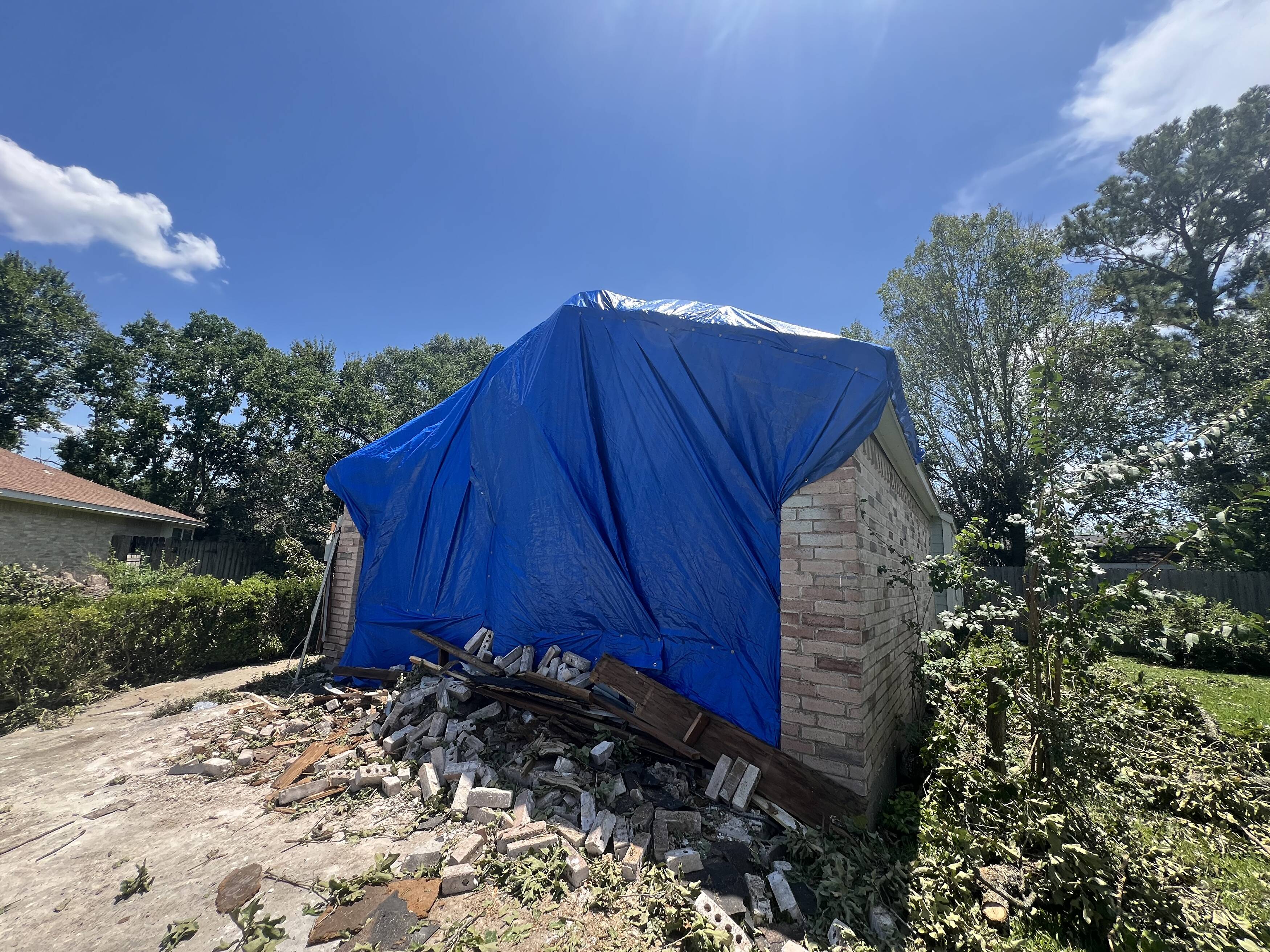
If your roof starts leaking during a storm, do four things in this order: stay safe and off the roof, contain the water inside, take dated photos of everything, and call to get the roof tarped once it's safe to work. The permanent repair comes later. Tonight's job is stopping the water from spreading and keeping a record of what happened.
Here's the step by step.
Step 1: Is anyone in danger?
Safety comes before the ceiling.
- Stay off the roof. Wet shingles in wind and lightning are how people get hurt. Nothing up there is worth it. A crew will tarp it when it's safe.
- Watch for water near electricity. If water is running near a light fixture, ceiling fan, or outlet, stay away from it. Turn that circuit off at the breaker only if you can reach the panel without standing in water.
- Watch the ceiling. A sagging, bulging ceiling can come down. Keep people and pets out from under it.
Step 2: Contain the water
Once everyone is safe, limit the damage inside.
- Move furniture, electronics, rugs and anything valuable out from under the drip.
- Put down towels and buckets, pots or a storage tote to catch the water.
- If ceiling paint or drywall is bulging with trapped water, poke a small hole at the lowest point over a bucket. A slow controlled drain is much better than the whole patch giving way.
- If you can get into the attic safely, look for where the water is coming through and put a container under it. Step only on framing, never between the joists.
Step 3: Document it while it's happening
This is the step people skip, and it's the one that matters most later.
- Take photos and video of the water coming in, the ceiling, the walls, the floor, and anything that got wet.
- Keep the timestamps. Don't edit or crop the originals.
- From the ground, and only when it's safe, photograph anything you can see outside: missing shingles in the yard, a limb on the roof, a gutter pulled loose.
- Write down the date and roughly when the leak started.
Whether you file an insurance claim or pay for the repair yourself, a dated record made at the time is the strongest starting point. If you do file, that decision and the claim are yours. Our itemized estimate is yours to share with your adjuster.
Tip
Check your homeowner's policy for what it says about reasonable steps to prevent further damage. Keep the receipts for buckets, tarps and anything else you buy that night.
Step 4: Get it tarped
A tarp isn't the repair. It's the tourniquet. It keeps water out while the real fix is scoped and scheduled.
| Weighted-down tarp | Fastened tarp | |
|---|---|---|
| How it's held | Bricks, sandbags, lumber on top | Mechanically fastened and battened |
| In the next wind | Often slides or lifts | Built to hold through the next front |
| Who installs | Often the homeowner, from a ladder | A crew with fall protection |
| Risk | Ladder fall, tarp blowing off | Low once it's on |
Call 832-257-8849 and tell us what happened and where the water is coming in. We'll tell you what to do right now while a crew heads your way. Our emergency roofing work covers tarping, temporary weatherproofing, and drone photos of the damage.
Why do Conroe roofs leak in storms?
Conroe sees a mix of hard spring storms, tropical rain from the Gulf, and I-45 hail runs, and each one finds a different weak spot. The most common sources we see:
- Wind-lifted or missing shingles, especially on older roofs near downtown and off Gladstell that have been through several storms.
- Tree strikes. Mature trees around Longmire, League Line and the older neighborhoods drop limbs onto roofs in high wind.
- Flashing and pipe boots. Clay soil movement in dry years can crack flashing seals on one-story homes, and wind-driven rain finds the gap.
- Clogged valleys and gutters. Leaves and pine needles pack the valleys, water backs up under the shingles, and it shows up as a ceiling stain.
- Builder-grade shingles on some newer homes that meet their first real storm.
Step 5: Plan the permanent repair
After the storm passes and the roof is dried in:
- Get a written, itemized estimate with drone photos of every slope, so you can see the damage the same way we do.
- Decide how you'll pay. If you're weighing a claim against paying out of pocket, read our guide on insurance claim or out-of-pocket roof repair.
- Repair or replace? One leak on a sound roof is usually a repair. A roof with leaks in several places may be at the end of its life. Our post on roof repair vs replacement in Conroe walks through it.
- Dry out the inside. Wet insulation and drywall need to dry or be replaced to avoid mold. Don't just paint over a stain.
Frequently Asked Questions
Should I go up on the roof to stop a leak during a storm?
No. Wet roofs in wind and lightning are dangerous. Contain the water inside, take photos, and call for a tarp once it's safe to work.
How long can a tarp stay on my roof?
A properly fastened tarp can hold for weeks if needed, but it's temporary by design. The goal is to schedule the permanent repair as soon as materials and weather allow.
Who pays the deductible if I file a claim?
You do. Texas law requires policyholders to pay their deductible, and any contractor who offers to waive it is breaking the law. We'll never do that, and you should walk away from anyone who offers.
The leak stopped when the rain stopped. Can I ignore it?
No. The opening is still there, and the water that came in may still be in the insulation or decking. Get it documented and estimated before the next storm finds the same spot.
A roofer knocked on my door right after the storm. Should I sign?
Take your time. Ask for a written, itemized estimate, photos of the damage on your roof, and references, and compare more than one. Walk away from any contractor who offers to waive the deductible.
The short version
Stay safe, contain the water, photograph everything, and get it tarped. Then get a free estimate for the permanent repair. To get ahead of the next one, our storm season preparation guide covers what to look at before it hits. We work across Conroe and Montgomery County. Storm damage? We document, estimate, and rebuild. City of Conroe Registered.
Francisco Brito, Roofing 365
Roofing & construction in Conroe, TX — written by the people on the roof, not a content farm.