August 25, 2026 · lake conroe
Roofing a Waterfront Home on Lake Conroe: What's Different
Lake Conroe waterfront homes take more punishment than inland roofs. Here's what the lake does to roofing materials and how to stay ahead of it.
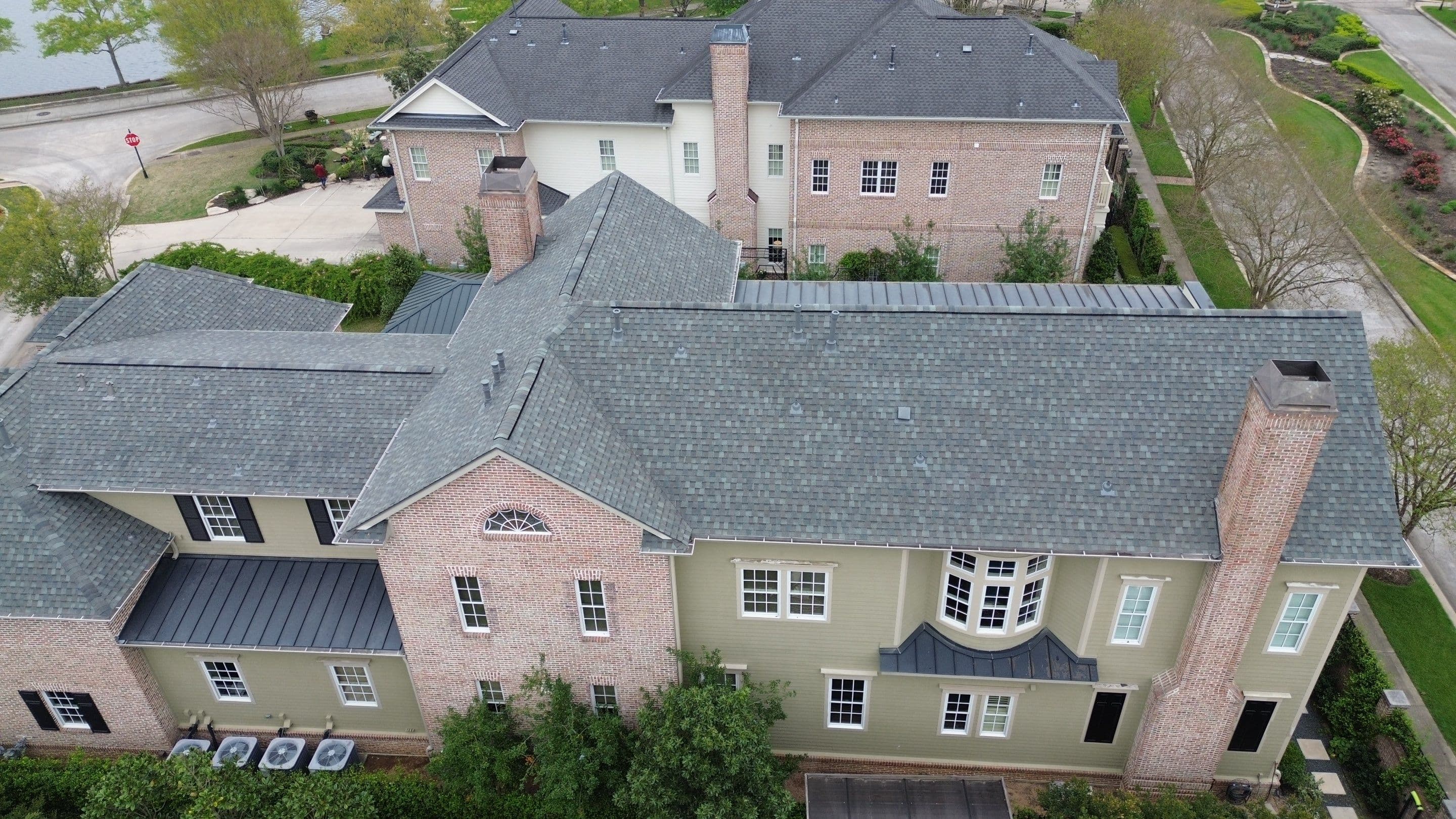
Waterfront homes on Lake Conroe face roofing conditions that a house five miles inland simply doesn't. Constant humidity off the water, wind with no tree buffer, and UV bouncing off the lake surface all shorten the life of roofing materials faster than most homeowners expect. If you own a home in Walden, April Sound, Cape Conroe, Grand Harbor, or any of the lakefront communities along FM 1097 or FM 830, here's what your roof is actually dealing with — and what to do about it.
What the lake does to your roof
Three things work against lakefront roofs that inland homes mostly avoid:
- Moisture. Lake humidity sits on your roof overnight and stays longer into the morning. That moisture accelerates algae and moss growth, loosens granules on asphalt shingles, and finds its way into every flashing gap faster than on a dry suburban lot.
- Wind. Open water means open fetch. Wind hits lakefront homes harder and from more consistent directions than homes sheltered by trees and other structures. Over time, that repeated wind load lifts shingle edges and works fasteners loose.
- UV reflection. Sunlight bouncing off the lake surface adds UV exposure to your roof beyond what the direct sun already delivers. That extra dose breaks down asphalt faster and fades coatings sooner.
None of this means a lakefront roof is doomed. It means it needs the right materials and more attention than a roof in a subdivision.
Materials that hold up on the water
Not every roofing material handles lake conditions equally.
Metal standing seam is the strongest option for waterfront. It sheds moisture completely, handles high winds without lifting, and doesn't grow algae. The upfront cost is higher, but on a lakefront home where the environment is harder on materials, the math usually works out over the life of the roof.
Asphalt shingles work fine on the lake — but only if they're rated for it. Algae-resistant shingles (look for the AR designation) are not optional on the water. Standard three-tab shingles without algae resistance will streak and deteriorate noticeably faster in a lakefront environment. Architectural (dimensional) shingles with a high wind rating and AR designation are the minimum for a Lake Conroe waterfront home.
Tip
If your current roof has dark streaks running down from the ridge, that's algae — not dirt. It's cosmetic at first, but it holds moisture against the shingle surface and accelerates granule loss over time. Algae-resistant shingles prevent it; cleaning treats it after the fact.
Ventilation matters more here
On an inland home, poor attic ventilation causes problems slowly. On a lakefront home, it causes them fast. Lake humidity plus Texas attic heat creates condensation inside the attic space. That condensation leads to mold on the decking, wet insulation, and rot — damage that's invisible from outside until it's expensive.
Proper ridge and soffit ventilation keeps air moving through the attic and carries that moisture out before it condenses. If your lakefront home has inadequate ventilation — and many older homes in the Lake Conroe communities do — fixing it during a roof replacement is significantly cheaper than fixing it as a standalone project later.
Inspect more often than you think
A standard recommendation for roof inspections is every two to three years. On a lakefront home, annually is the right cadence. The environment is harder on the materials, and catching a small issue — a lifted flashing edge, early algae growth, a ventilation gap — before it becomes water inside your home is the entire point of an inspection.
After any significant storm with wind off the lake, get eyes on the roof regardless of the schedule. Wind-driven rain off open water finds gaps that a normal rainstorm wouldn't.
How often should I inspect my roof on Lake Conroe?
Annually at minimum, and after any significant wind event. The lake environment accelerates wear faster than inland conditions, so the standard two-to-three-year cycle isn't frequent enough for waterfront homes.
What is the best roofing material for a waterfront home?
Metal standing seam handles moisture, wind, and UV best. If you prefer shingles, use architectural shingles with an algae-resistant (AR) rating and a high wind rating — standard three-tab shingles won't hold up well on the water.
Does lake humidity actually damage roofs?
Yes. Sustained humidity accelerates algae and moss growth, loosens shingle granules, and creates condensation in poorly ventilated attics. The damage is gradual but real — lakefront roofs age faster than inland roofs in the same county.
Do waterfront homes need special attic ventilation?
They need adequate ventilation, which many older lakefront homes lack. Lake humidity combined with attic heat causes condensation, mold, and decking rot. Proper ridge and soffit ventilation prevents it.
The short version
Living on the lake is worth every bit of the extra roof attention it requires. Use materials rated for the environment, make sure the attic breathes, and inspect every year instead of every three. Do that and a lakefront roof lasts as long as any other.
Waterfront home on Lake Conroe?
Free estimate — we'll tell you exactly what the lake is doing to your roof and what to watch.
Francisco Brito, Roofing 365
Roofing & construction in Conroe, TX — written by the people on the roof, not a content farm.