October 26, 2026 · conroe
How to Read a Roofing Estimate: What Should Be Itemized and What to Ask
A Conroe homeowner's guide to reading a roofing estimate: the line items you should see, the photos that should back them up, and the questions to ask any roofer.
A good roofing estimate is in writing, broken into line items, and backed by photos of the problems it's priced to fix. You should be able to see what's being removed, what's going on, what happens if the crew finds rot under the shingles, and what's included in cleanup. If an estimate is one number and a shingle color, you can't compare it with anything, and that's the problem.
Why this matters in Conroe
Conroe's housing is unusually mixed for one city. A newer home in Grand Central Park with builder-grade shingles can be five minutes from a 1970s ranch near downtown that's on its second or third roof. Shaded lots off Longmire hold moisture and need ventilation thought through. After the May 2024 derecho and Hurricane Beryl, a lot of homeowners here got estimates from crews they'd never heard of. Two homes that different shouldn't get the same estimate, and itemizing is how you tell whether yours was written for your house.
The line items, one by one
Here are the categories most residential replacement estimates should cover. The wording varies from roofer to roofer, but each one should be there or be explained.
1. Tear-off and disposal
Removing the old roof down to the deck, plus hauling it away. Look for how many layers are coming off and who handles the dumpster and cleanup. A magnet sweep for nails in the yard and driveway belongs here too.
2. Decking
The plywood or boards under the shingles. Nobody can see all of it until the old roof is off, so a good estimate says how soft or rotted decking will be handled: a stated allowance, or a per-sheet replacement line. That number should be agreed in writing before the crew finds anything.
3. Underlayment
The layer between the deck and the shingles. The estimate should name what goes down, and where any self-adhered membrane goes, such as valleys and around penetrations.
4. Flashing
The metal that keeps water out where the roof meets something else: walls, chimneys, skylights, valleys, and the roof edge (drip edge). Ask whether flashing is being replaced or reused. Pipe boots around plumbing vents usually belong here too.
5. Ventilation
Ridge vents, box vents, soffit intake, or whatever the roof needs. Attics here get extremely hot in summer, and ventilation affects how long the shingles last. The estimate should say what's going on, not just "vents."
6. The roofing material
Brand, product line, and color for shingles or metal, plus starter strip and ridge cap. That lets you look up the product and compare like with like.
7. Everything else
Anything specific to your house: replacing rotted fascia, a satellite dish reset, gutters coming off and going back on. Ask about permits too, if your city requires one: whether it's included, and who handles it.
What a vague estimate looks like next to an itemized one
| Item | Vague estimate | Itemized estimate |
|---|---|---|
| Removal | "Tear off old roof" | Layers removed, disposal, cleanup and nail sweep |
| Decking | Not mentioned | Allowance or per-sheet line, agreed before work starts |
| Underlayment | "Felt" | Product named, plus where any membrane goes |
| Flashing | Not mentioned | Replaced or reused, by location, plus pipe boots |
| Ventilation | "Vents" | Type, number and location |
| Shingles | A color | Brand, product line, color, starter and ridge cap |
| Photos | None | Photos of the damage or wear each repair addresses |
Photos should back up the estimate
An estimate tells you what the roofer plans to do. Photos show you why. Before you agree to anything, ask to see photos of:
- every area flagged for repair or replacement,
- soft spots, lifted shingles, cracked pipe boots, or failed flashing,
- the attic, if they're claiming ventilation or decking problems.
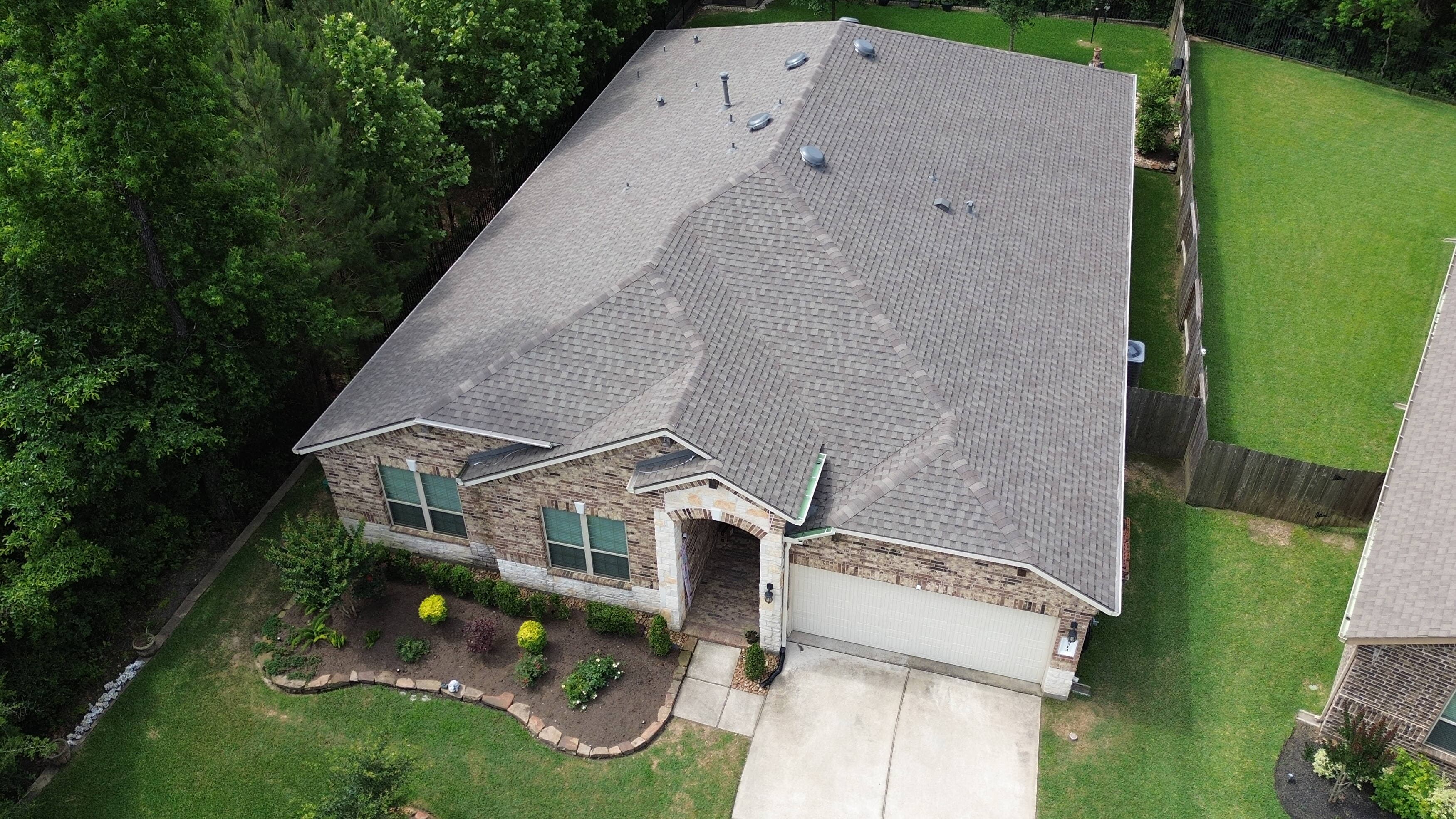
We document every roof with drone photos plus close-ups, so the homeowner sees what we see. Whoever you hire, the photos and the line items should match. If the estimate calls for something the photos don't show, ask why.
Questions to ask any roofer
- What happens if you find rotten decking? Get the allowance or the per-sheet amount in writing.
- Is flashing being replaced or reused? And where?
- What underlayment are you using, and where does the membrane go?
- What's the ventilation plan? And why that, for this attic?
- What warranty comes with it? Ask for the manufacturer's material warranty and the roofer's workmanship terms, both in writing.
- Who's on the roof, and who do I call if there's a problem later?
- Is this the final price? Ask what could change it, and how you'd be told before any extra work happens.
If insurance is involved, the itemized estimate still does the same job: you file the claim; our itemized estimate is yours to share with your adjuster. For more on that decision, see insurance claim or out-of-pocket repair.
Why are two roofing estimates so different?
Usually because they don't cover the same work. One might replace flashing and include a decking allowance while the other reuses flashing and leaves decking out. Lining up the line items side by side is the only fair way to compare.
Should a roofing estimate include decking?
It should say how decking will be handled, even though nobody can see all of it until the old roof is off. Look for a stated allowance or a per-sheet replacement line agreed in writing before the work starts.
Is a one-page estimate a red flag?
Not on its own, but a single total with no line items makes it hard to know what you're paying for. Ask the roofer to break it out. A roofer who stands behind the number won't mind.
What photos should come with a roofing estimate?
Photos of each area the estimate addresses: damaged shingles, flashing, pipe boots, soft spots, and the attic if ventilation or decking is in question. The photos and the line items should match.
Can I use one roofer's estimate to compare others?
Yes. An itemized estimate is a good checklist. Ask every roofer to cover the same items so you're comparing the same scope.
Ready to compare?
An estimate you can read line by line is one you can compare and trust. Our roof installation and roof repair pages show what our estimates cover. If you're still choosing a contractor, start with how to choose a roofing contractor in Montgomery County. We work across Conroe every week; see the Conroe service area.
Want one to compare against? Ask for a free estimate: itemized, written, with drone photos of your roof.
Want an estimate you can actually read?
Free estimate: itemized, in writing, with drone photos of your roof.
Francisco Brito, Roofing 365
Roofing & construction in Conroe, TX — written by the people on the roof, not a content farm.